Before there was al pastor, there were tacos arabes. Puebla’s most historically important taco was invented by Lebanese immigrants who arrived in Mexico in the early twentieth century and brought vertical-spit roasting with them.
From shawarma to trompo
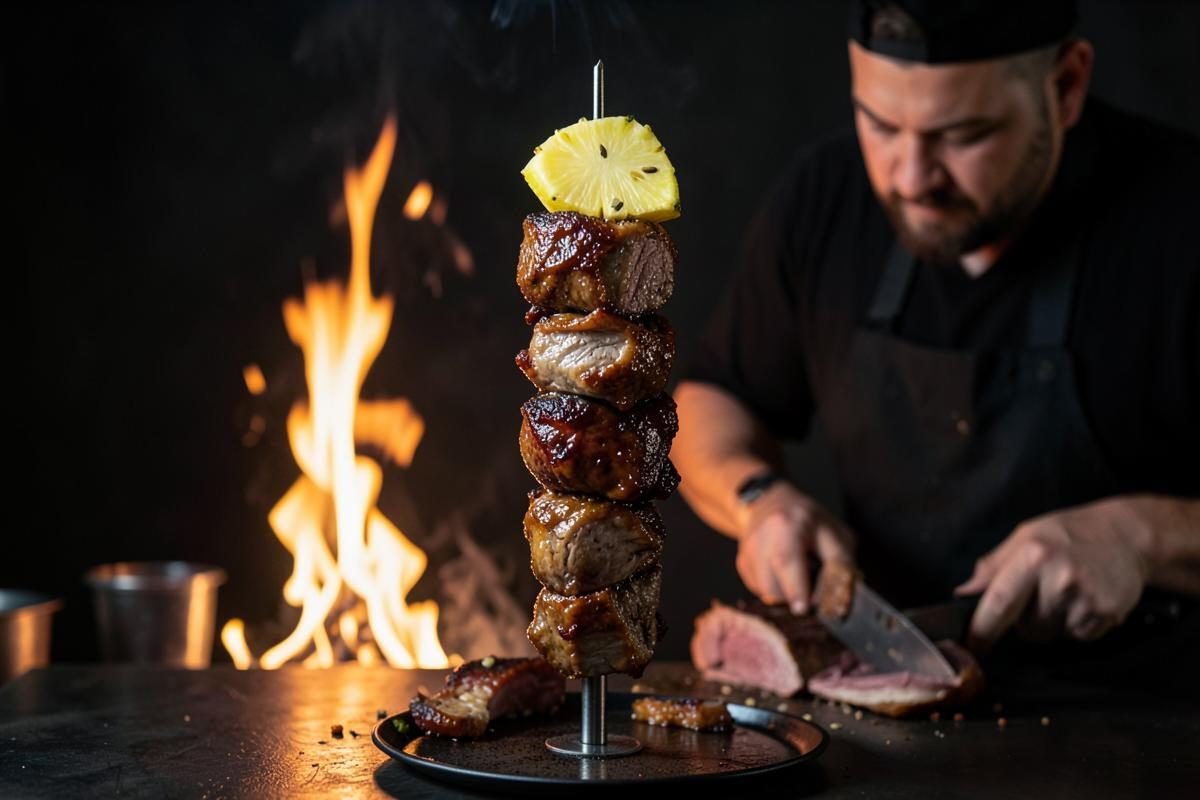
Lebanese families in Puebla adapted lamb shawarma to local ingredients, switching to pork and stacking it on a vertical spit called a trompo. The meat is seasoned simply with salt, pepper, cumin, and a little oregano rather than the chile-and-achiote marinade that came later.
The bread is the tell
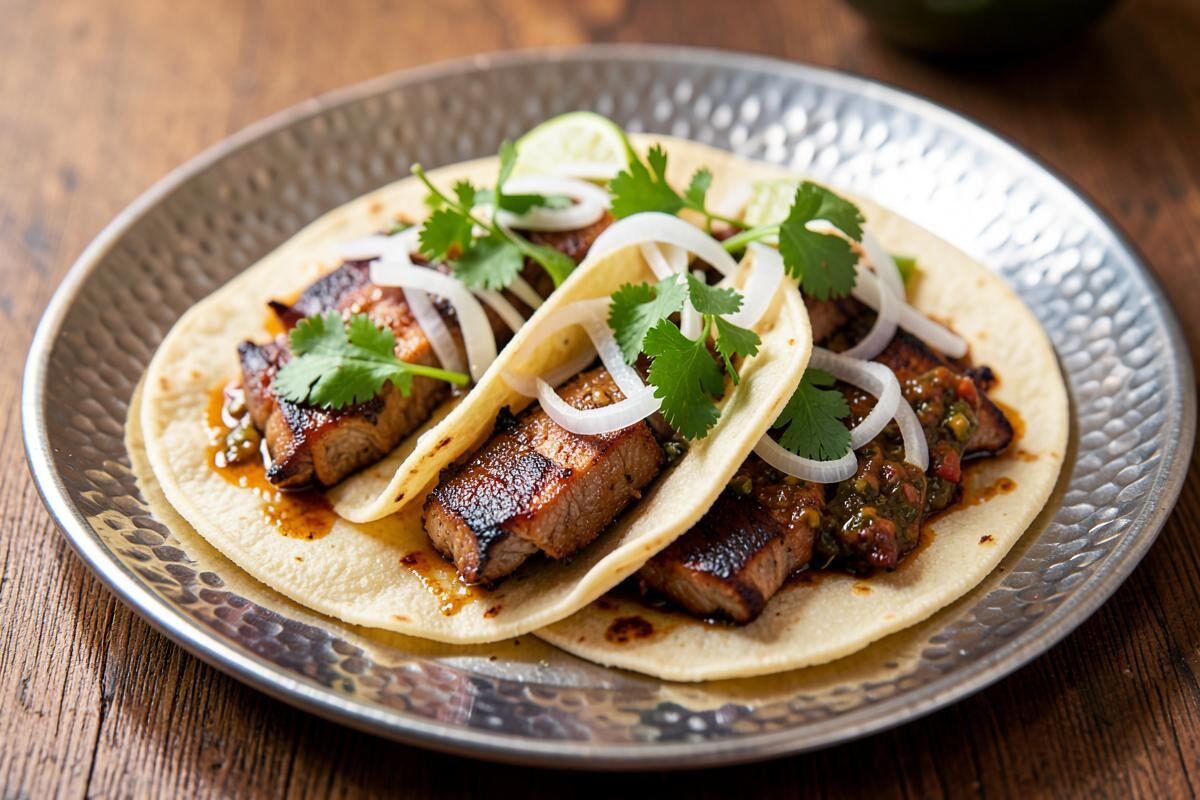
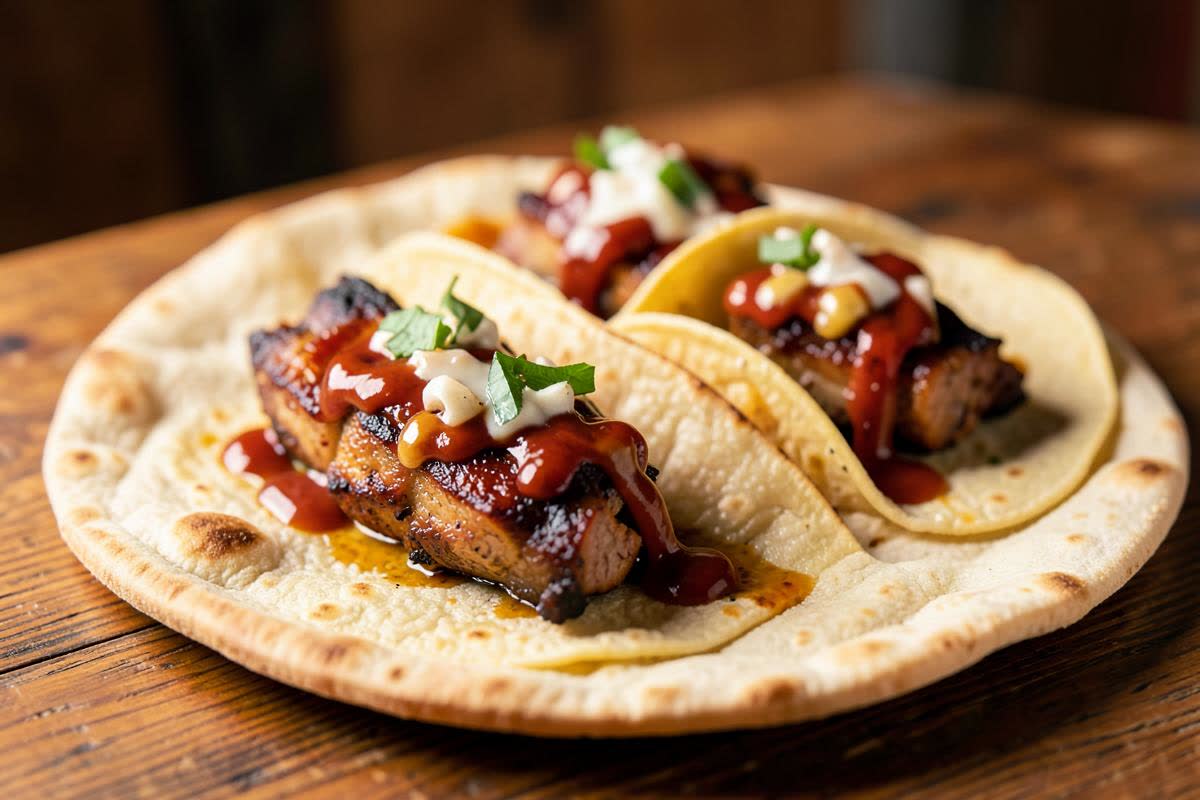
Tacos arabes are served on pan arabe, a thick flour flatbread closer to pita than to a tortilla. It is griddled until blistered and pliable, then wrapped tightly around the meat. If you are served a corn tortilla, you are eating something else.
The sauce
The classic accompaniment is a chipotle-based sauce, smoky and slightly sweet, often thinned with vinegar. Lemon rather than lime is common, another Levantine holdover. Some stalls add a garlic-yogurt sauce that makes the shawarma lineage obvious.
How al pastor came from it
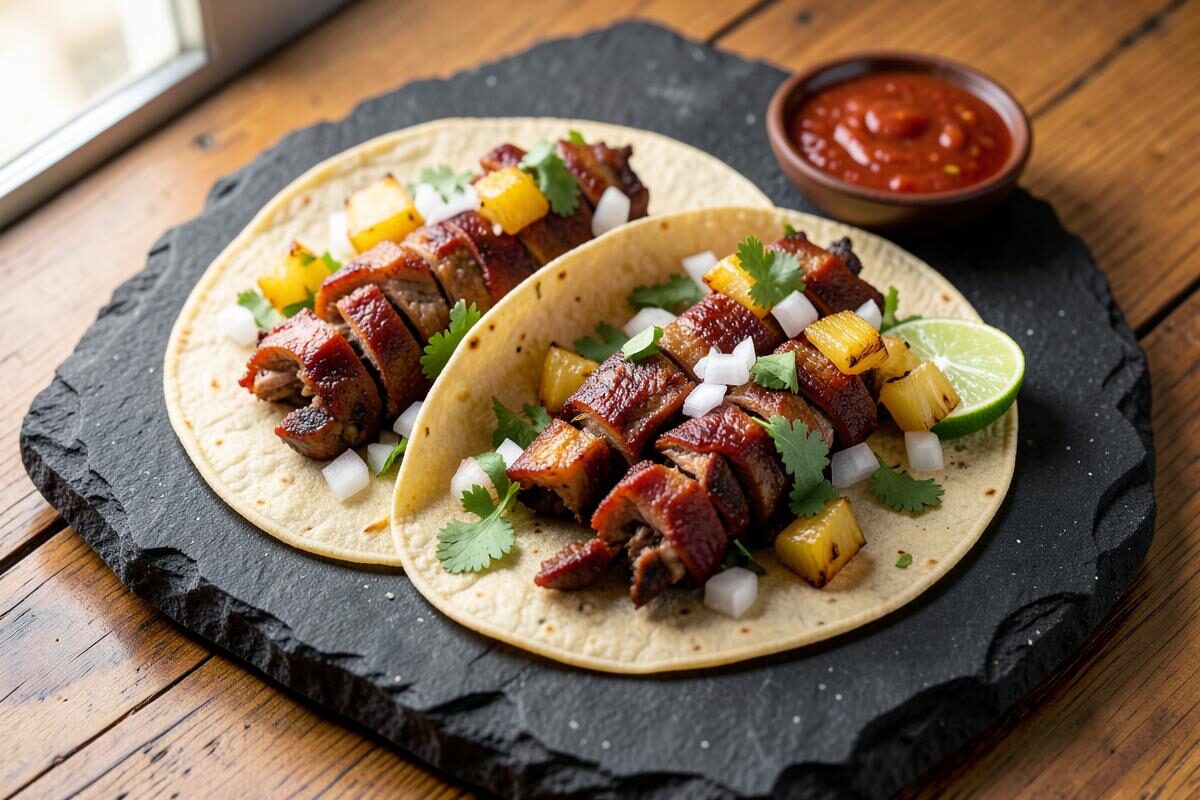
Over decades, Mexican cooks swapped the flatbread for corn tortillas, added guajillo and achiote marinade, and finished the taco with pineapple, onion, and cilantro. That evolution produced tacos al pastor, now the most famous taco in Mexico. Tacos arabes are the earlier draft, still served in Puebla exactly as it was.
Where to try them
Look for Puebla-style taquerias, often family-run, that advertise pan arabe on the sign. The good ones slice the meat directly from the trompo to order and press the bread on the same griddle.
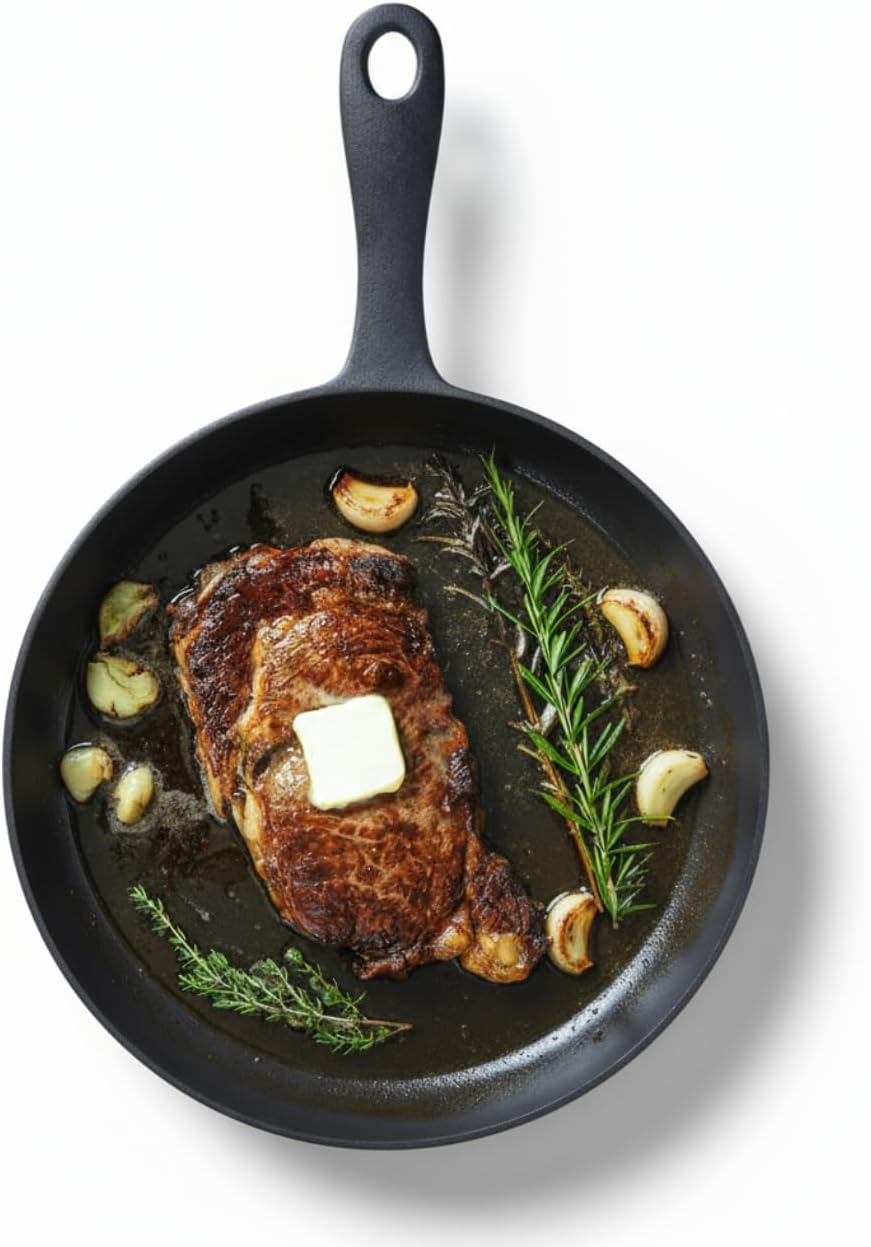
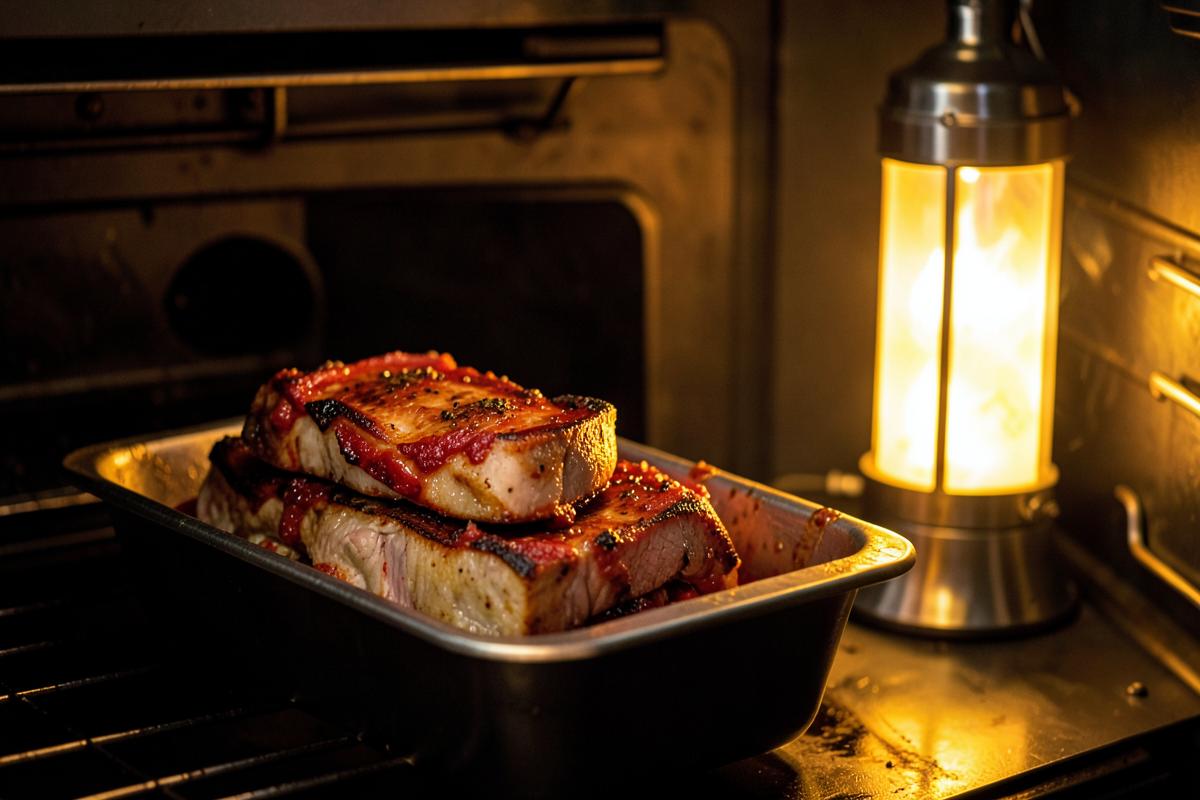
Our tacos arabes recipe uses a home oven and a cast iron pan to get close to the original, and our al pastor guide traces the rest of the story.