Every home al pastor recipe promises trompo results without a trompo. Some are close. Understanding what the spit actually does tells you how close you can get.
What the trompo does
- Self-basting: fat renders from the top of the stack and travels down, continuously moistening lower layers.
- Radiant heat: a vertical flame sears only the outer surface, so the interior stays raw until it rotates into position.
- Shave-to-order: only crisped meat is served, and only at the moment it crisps.
- Time: a trompo runs for hours, deepening flavor across the stack.
What an oven cannot replicate
Convection heat cooks all surfaces at once, so you cannot serve only the caramelized exterior. That is the core difference and no recipe eliminates it.
What you can replicate
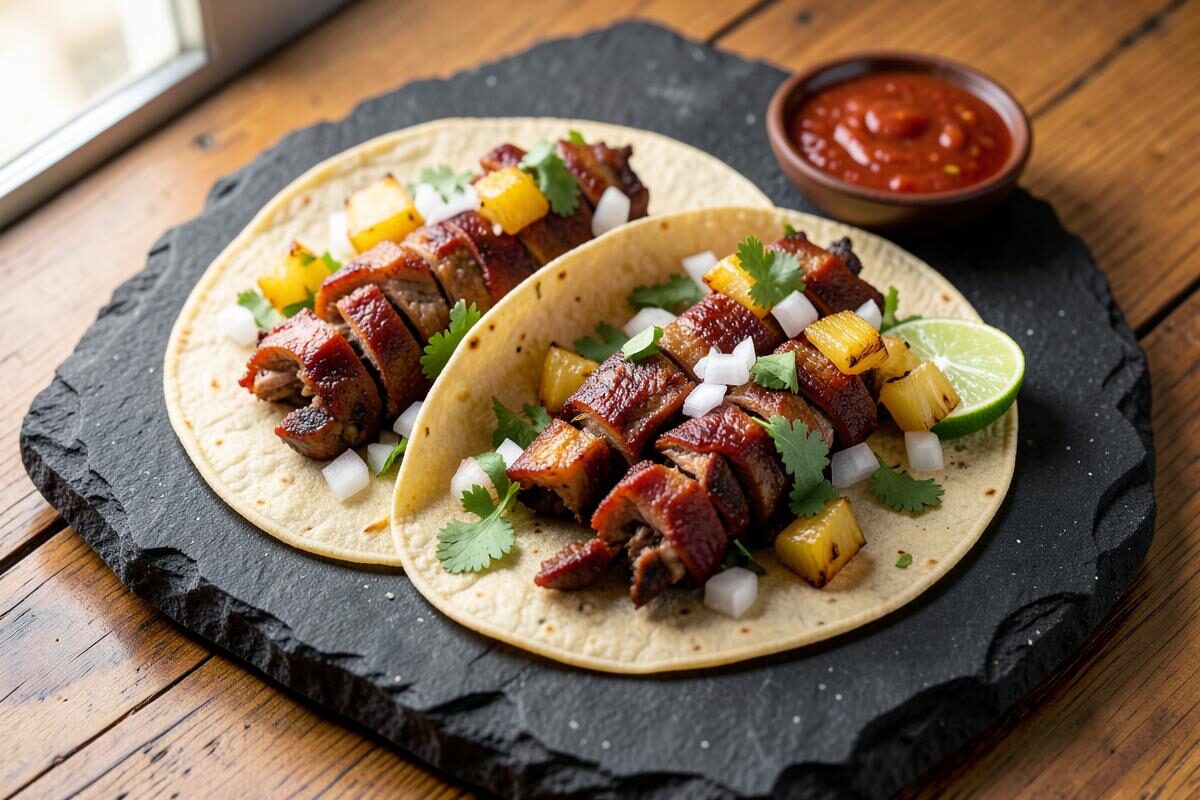
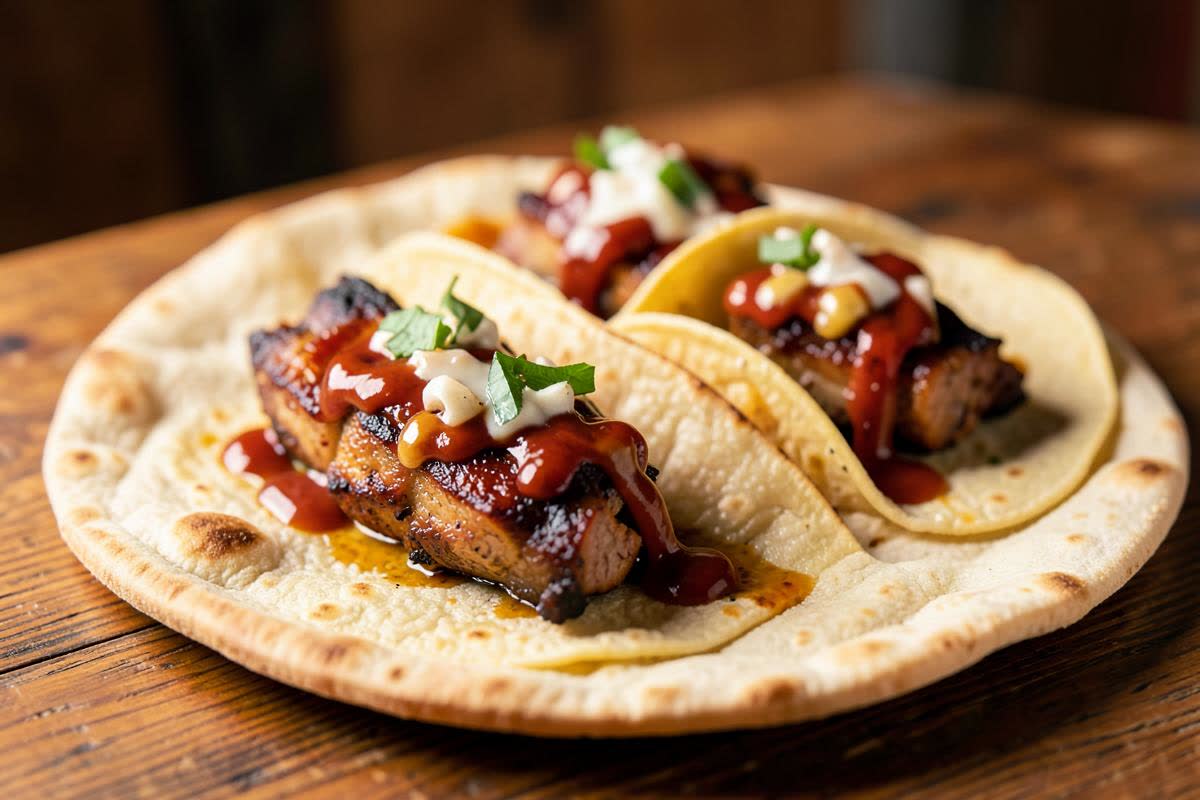
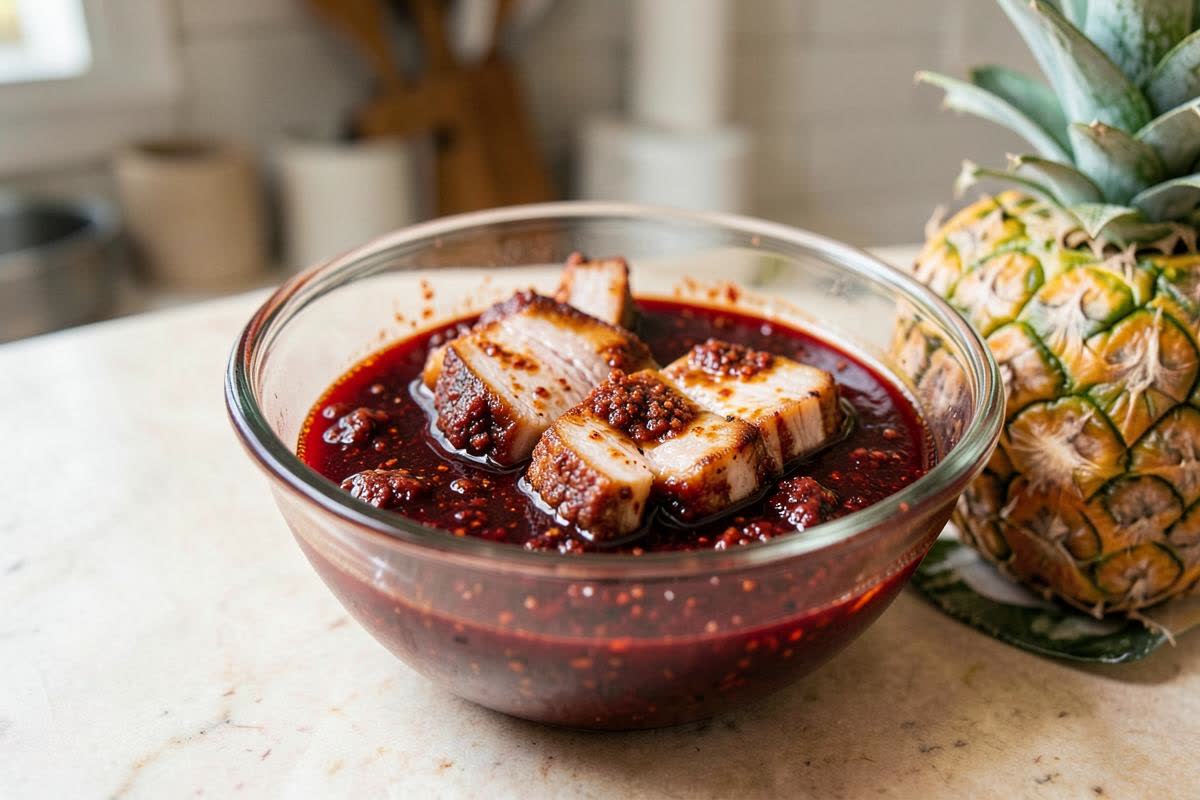
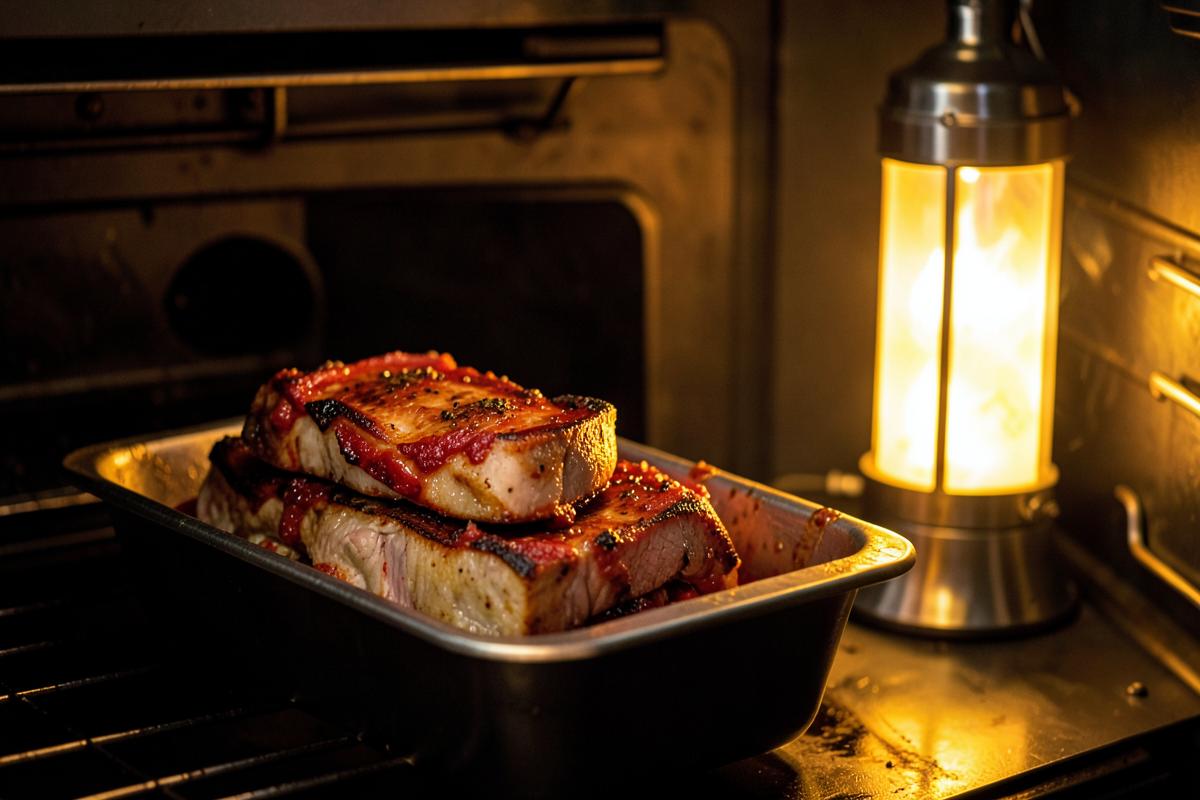
Most of it, actually. Stack marinated slices tightly in a loaf pan, roast at 375°F for about an hour, rest, then slice thin and finish the pieces on a screaming-hot skillet. The final sear is doing the trompo's job in a compressed form. The stacked roast recovers the self-basting effect.
Blind-taste reality
Side by side, trompo al pastor wins on aroma, edge texture, and the smoke a gas flame contributes. Skillet-finished oven al pastor gets roughly 80 percent of the way there, which is a very good outcome for a Tuesday.
Does it matter?
For a home cook, no. Skipping the final sear matters far more than skipping the spit. For a restaurant charging for al pastor, yes: a real trompo is a signal of commitment and you can taste it.
Our home marinade guide and al pastor recipe use exactly this method.