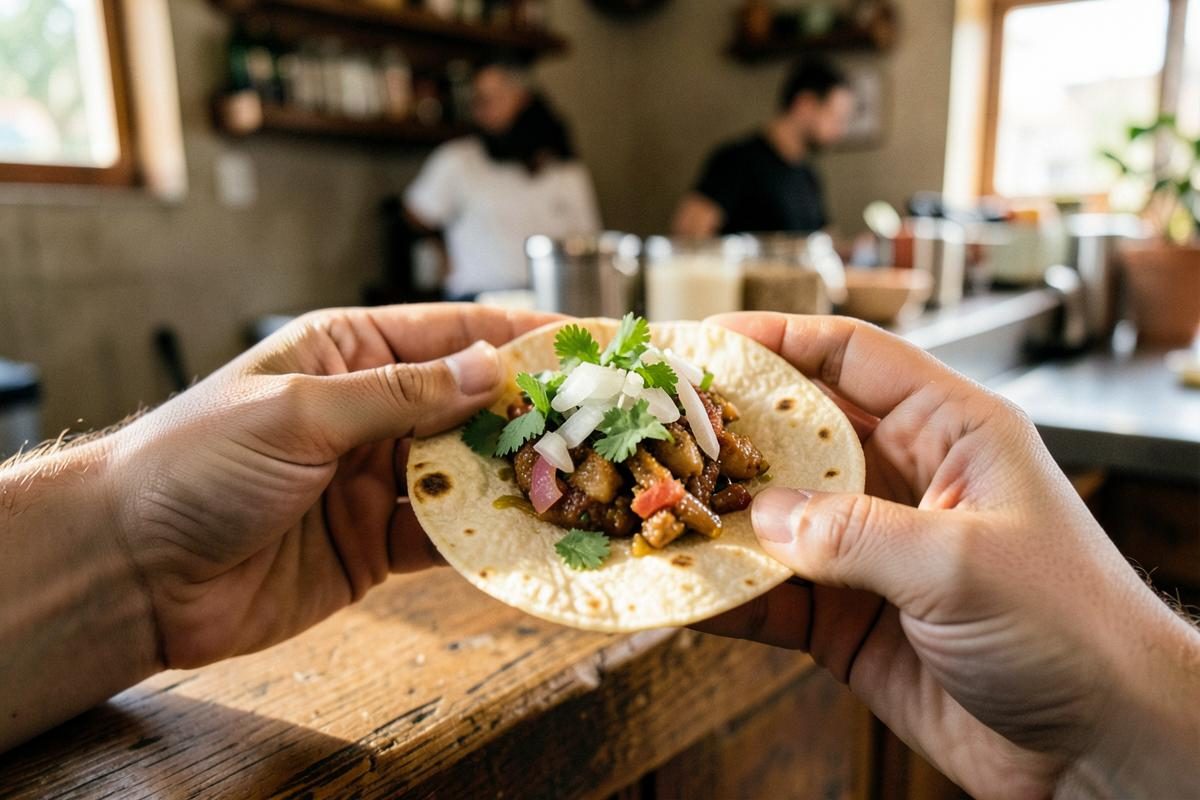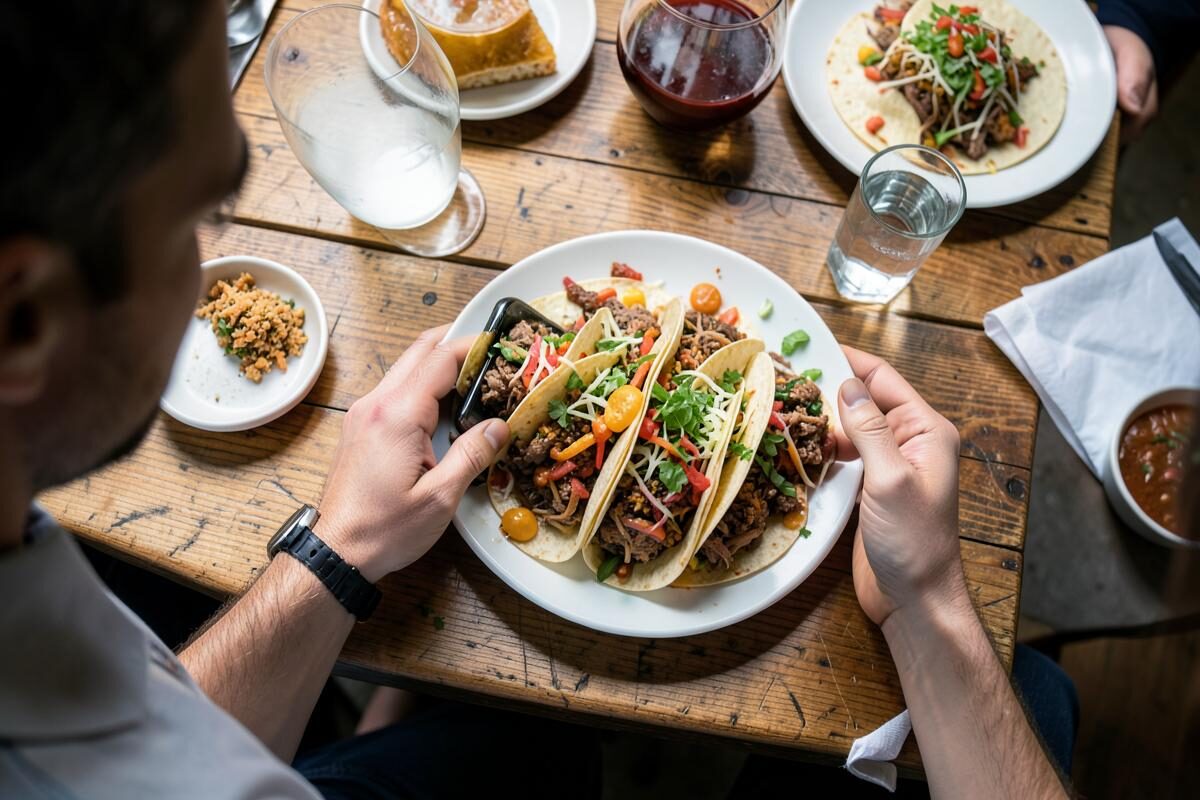
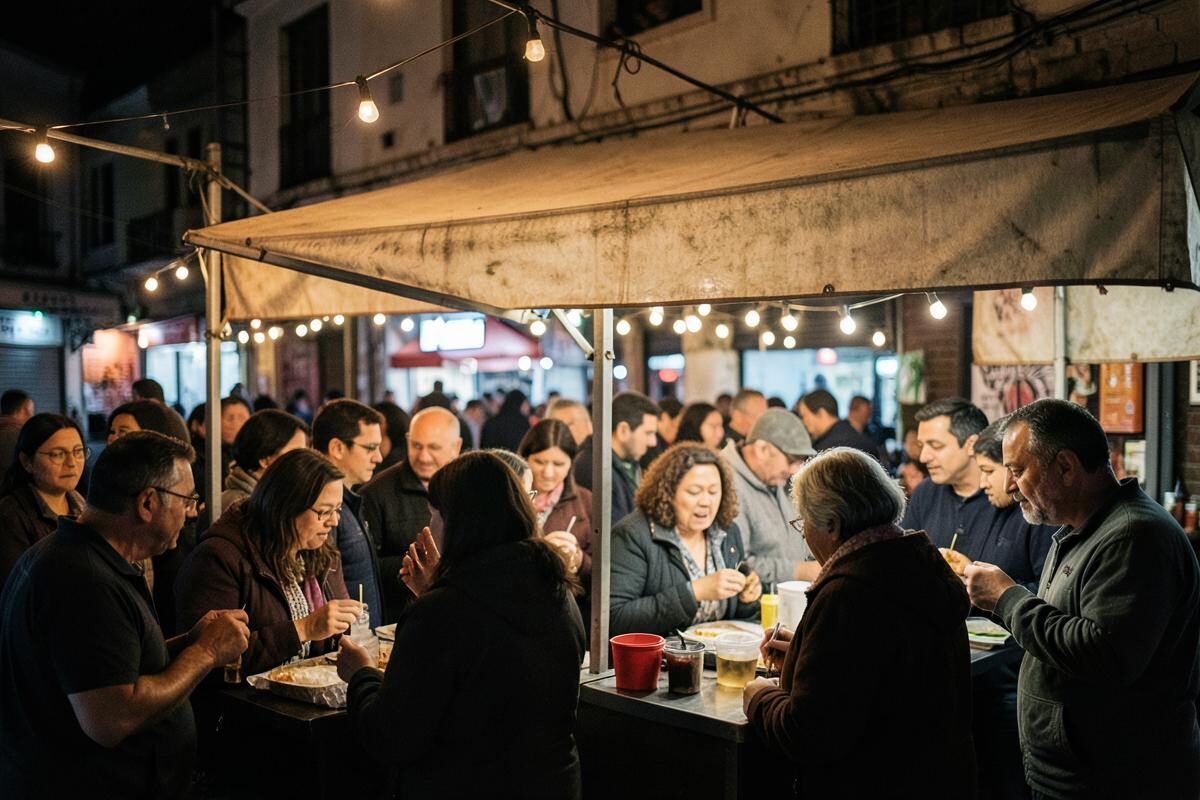
Some taco trucks are just good food. Others become fixtures that a neighborhood organizes itself around. The difference is rarely about the recipes.
Reliability builds ritual
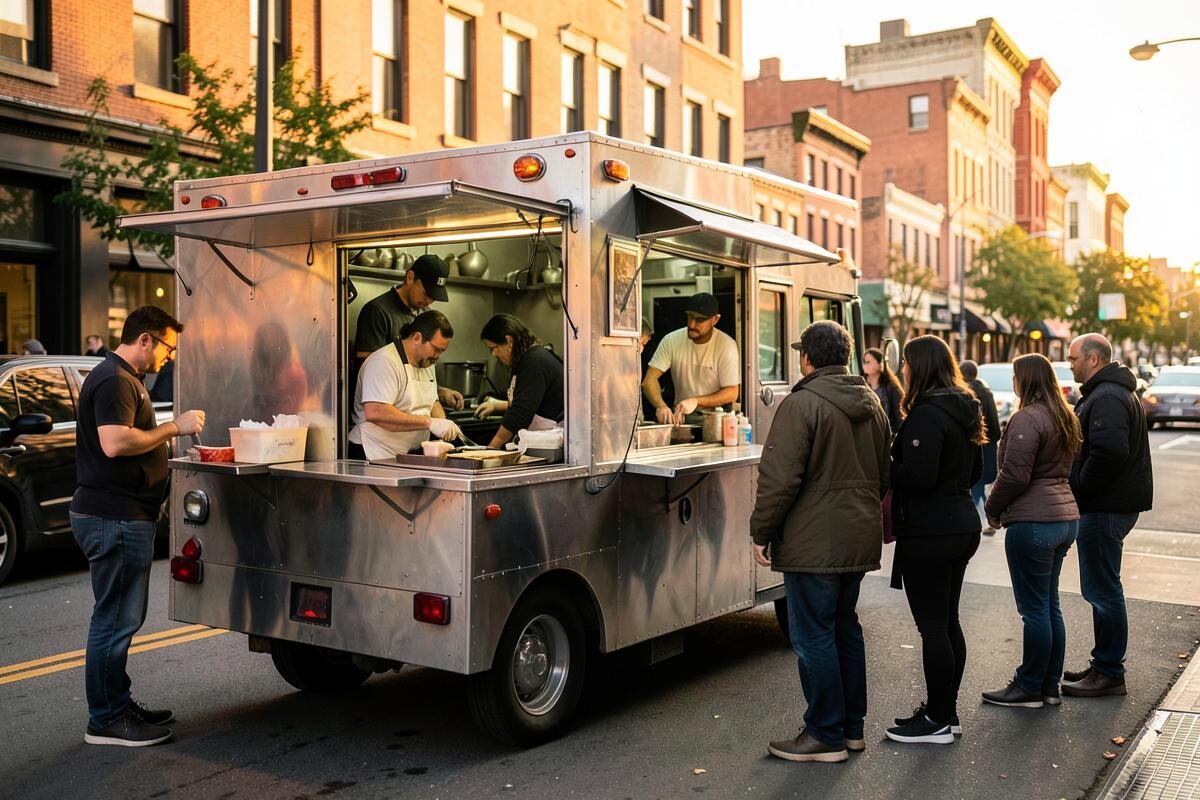
A truck that is in the same spot at the same hours every week becomes a landmark. People give directions by it. Shift workers plan around it. That predictability is what converts customers into regulars and regulars into a community.
The late-night function
Trucks often serve hours no restaurant will: after bar close, before dawn shifts, during holidays. In many neighborhoods, a taco truck is the only lit, staffed, welcoming place at two in the morning. That role has real social value.
Economic reach
A successful truck employs family and neighbors, buys from local carnicerias and produce markets, and often funds a second truck or a brick-and-mortar within a decade. The money circulates close to home.
The informal signals of a real one
- A line with people of every age, including families with kids.
- Regulars who are greeted by name and do not need to order.
- A short menu that has not changed in years.
- Salsas made in-house and refilled during service.
- Cash-first pricing that has crept up slowly, not jumped.
What threatens them
Rising commissary fees, permit costs, parking enforcement, and neighborhood turnover all put pressure on long-running trucks. The ones that survive usually do so because their customers show up in city council meetings as well as at the window.
How to be a good regular
Bring cash, learn the names, tip on the total, and tell people. Word of mouth is still the only marketing most of these businesses have.
Find and support long-running trucks through our directory and community rankings.