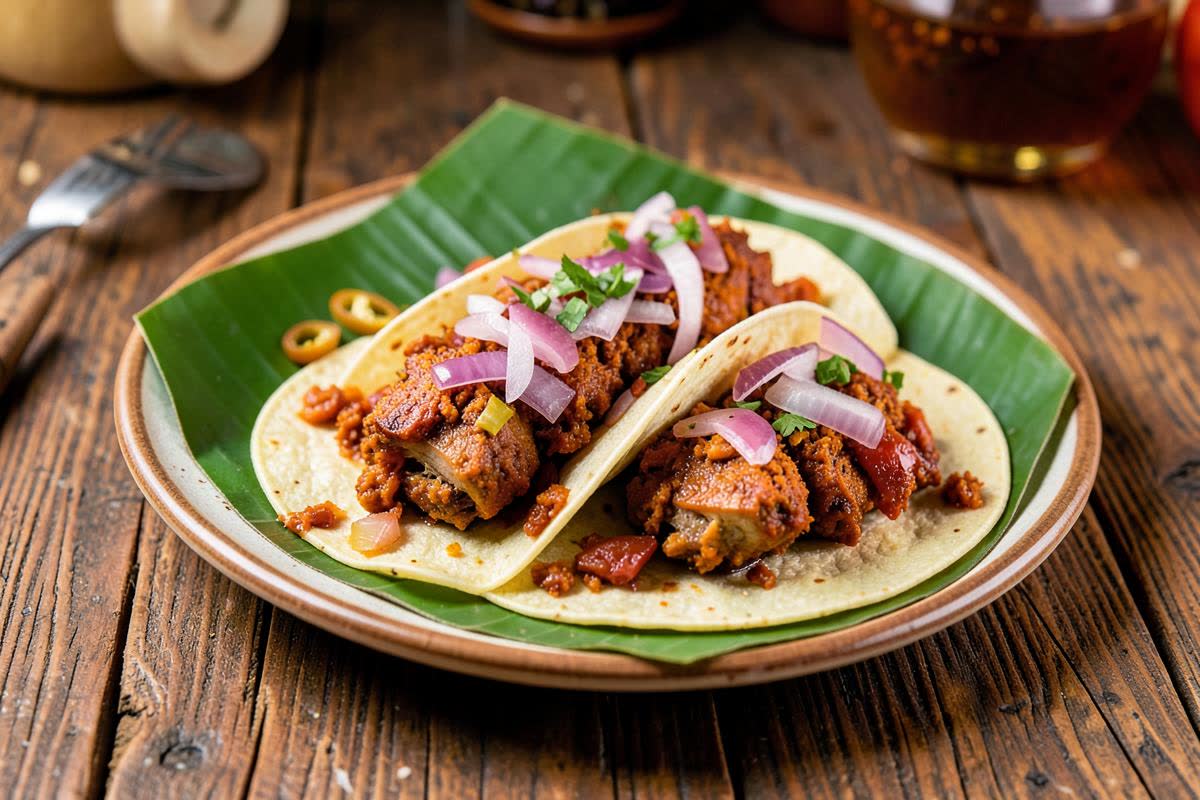
Cochinita pibil is the Yucatan’s signature dish and one of the oldest continuously cooked recipes in Mexico. Deep orange, sour, and impossibly tender, it is what happens when Maya pit cooking meets Spanish pork and Caribbean citrus.
What the name means
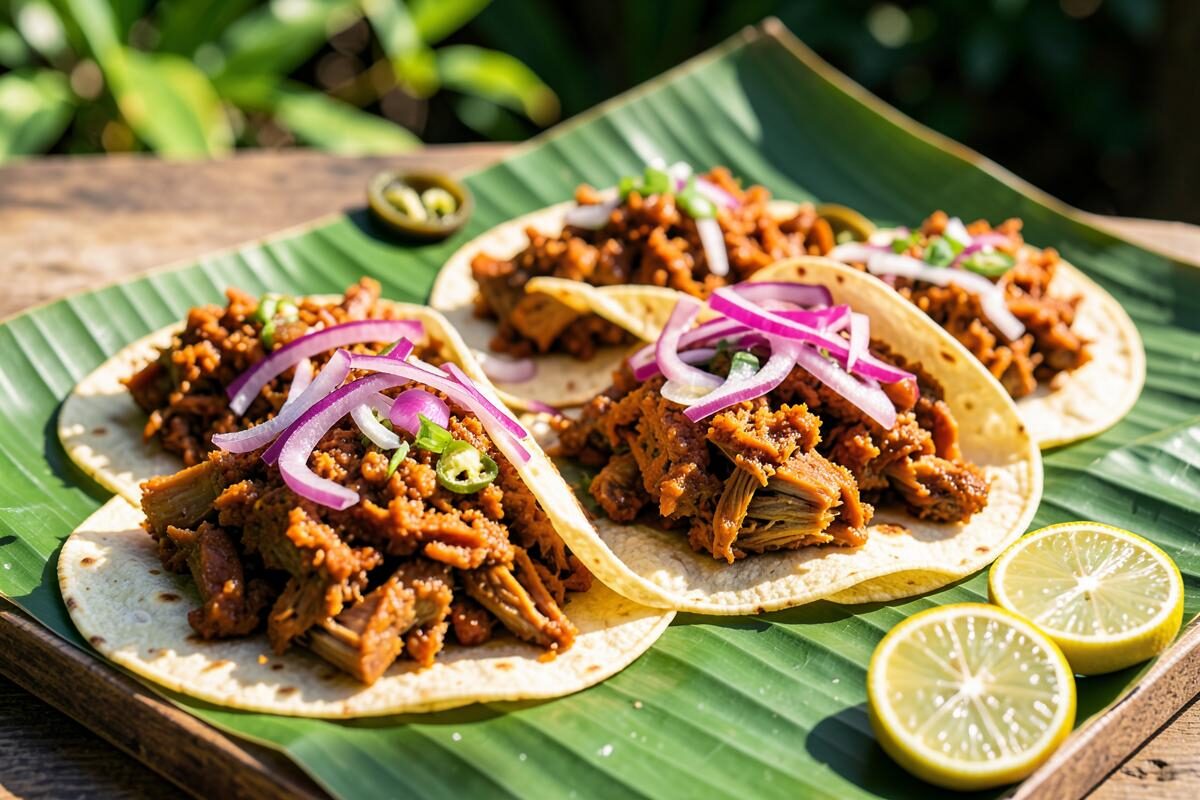
Cochinita means little pig. Pib is the Maya word for the earth oven where the meat traditionally cooks. Pork is marinated, wrapped in banana leaves, buried over hot stones, and left for hours until it collapses.
The three flavors that define it
- Achiote: annatto seed paste, which gives the dish its color and an earthy, peppery base.
- Sour orange: naranja agria, tart and floral. A mix of orange and lime juice is the standard substitute.
- Banana leaf: not just a wrapper. It steams the meat and adds a green, tea-like aroma.
How it is served
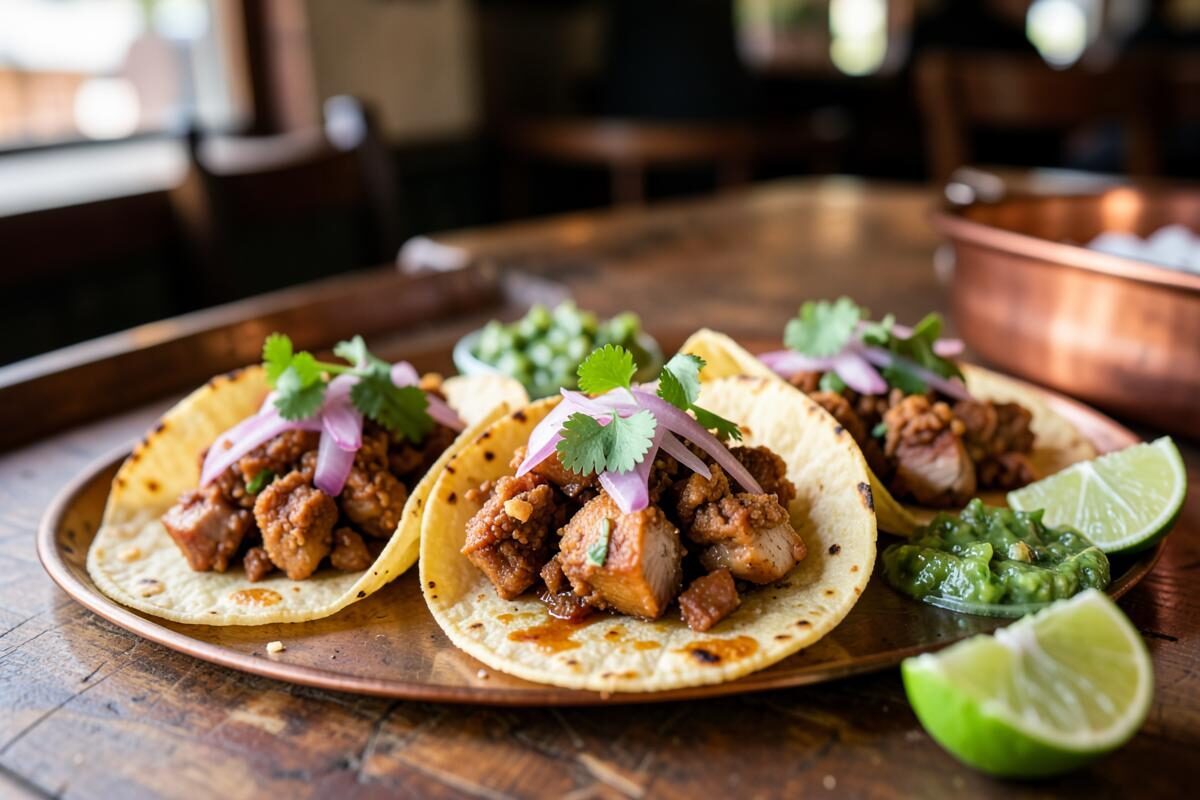
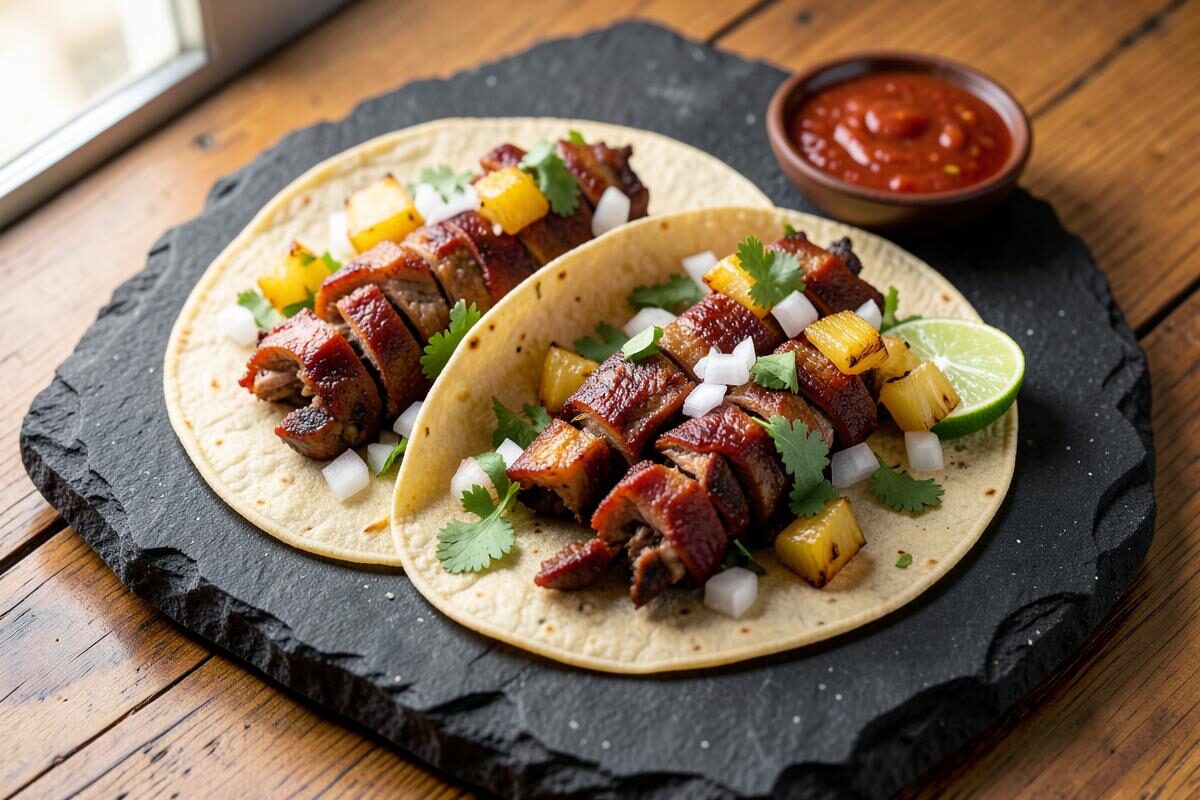
Cochinita is piled onto corn tortillas and topped with pickled red onion and habanero salsa. The pickles are not optional. Their acidity cuts the fat and the habanero supplies the heat that the marinade deliberately leaves out.
Making it without a pit
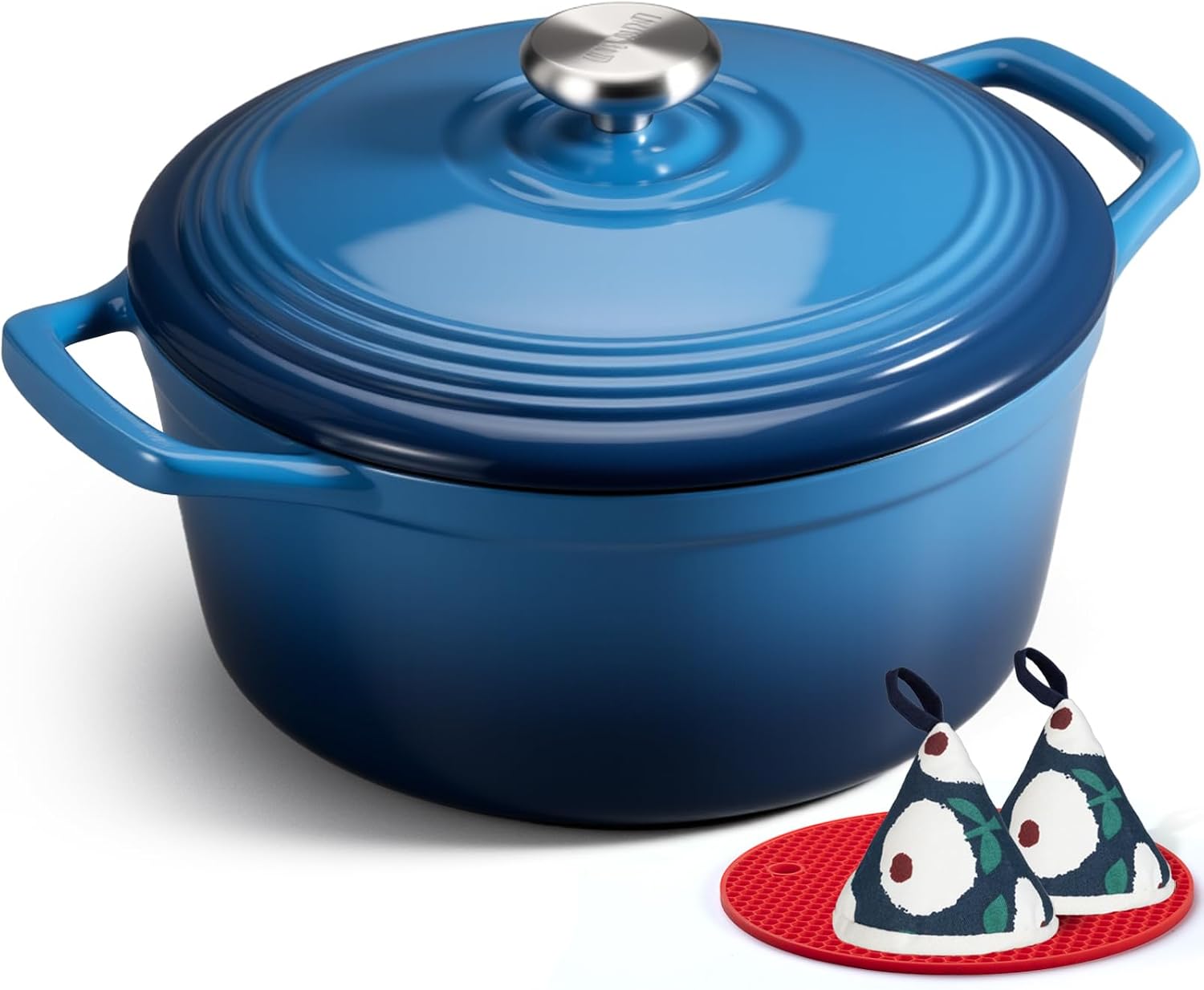
A Dutch oven works. Rub pork shoulder with achiote paste thinned with sour orange juice, salt, and a little oregano. Marinate overnight. Line the pot with banana leaves, add the pork, fold the leaves over, cover, and roast at 300°F for four hours. Shred the meat in its own juices and let it sit ten minutes before serving.
What to look for when ordering
Great cochinita is moist, not dry or stringy, and orange all the way through rather than just on the surface. It should taste sour before it tastes spicy. If the pickled onions are pale pink and crunchy, the kitchen is paying attention.
Try our cochinita pibil recipe this weekend, and browse the directory for Yucatecan kitchens near you.