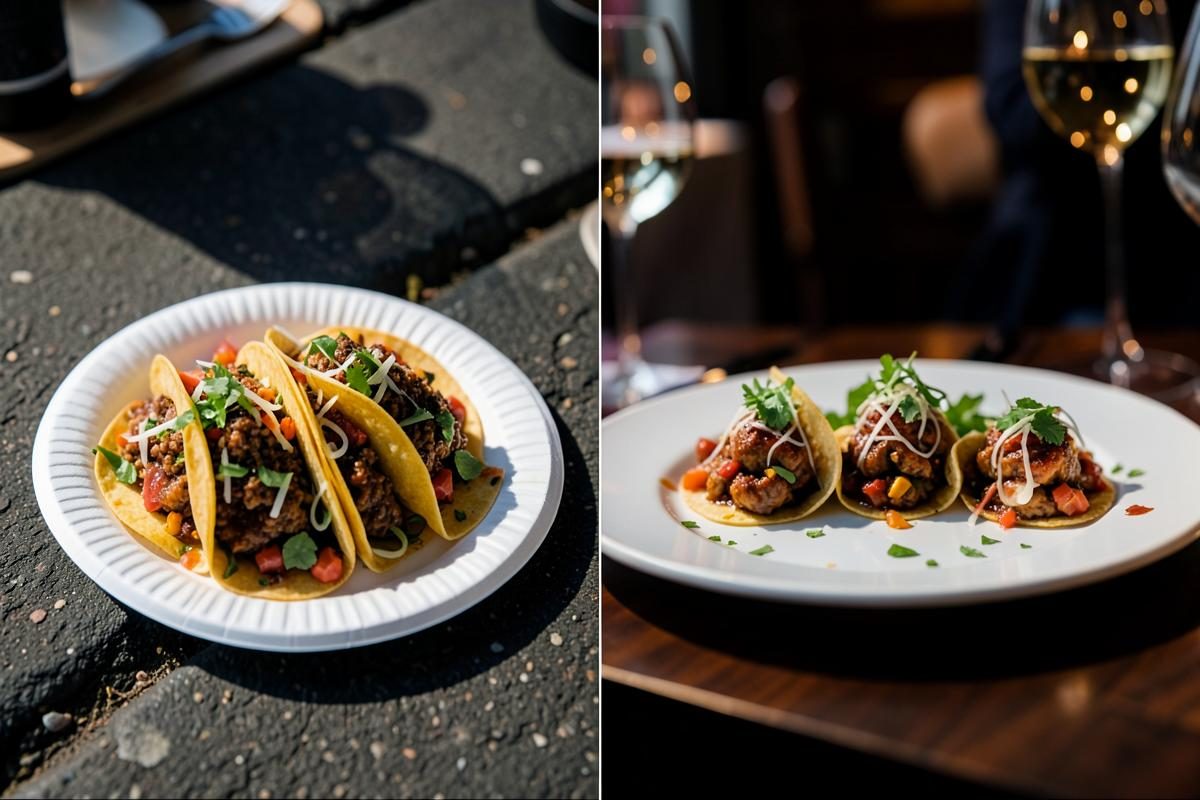
Street tacos and restaurant tacos are often treated as a hierarchy, with the cart on top for authenticity and the restaurant on top for quality. Neither ranking holds up. They are optimized for different things.
What street tacos do best
- Specialization. A cart usually cooks one or two things all day, every day. Repetition breeds precision.
- Heat. Griddles and trompos run hotter and longer than most restaurant equipment.
- Freshness by turnover. Food does not sit. It is made as you watch.
- Price. You can eat extremely well for very little.
What restaurant tacos do best
- Sourcing. Better cuts, house-nixtamalized masa, and seafood handled with more control.
- Range. Sides, drinks, desserts and a menu that can go beyond the griddle.
- Comfort. Seats, restrooms, air conditioning and a table for a group.
- Consistency. A trained kitchen with recipes holds a standard across shifts.
Where restaurants often go wrong
Oversized tacos, cold tortillas served in a basket, and plating that prioritizes photos over heat. A taco that sits three minutes under a heat lamp has already lost.
Where street carts often go wrong
Limited hours, no seating, cash only, and inconsistency when a different cook works the griddle.
The price reality
Street tacos typically run a fraction of restaurant prices, and part of what you pay for in a restaurant is rent and service, not better cooking. But a good restaurant making its own masa is offering something a cart usually cannot.
The verdict
For pastor, suadero, carnitas and any griddle-based classic, the street usually wins. For seafood, house tortillas, composed plates and group dining, the restaurant usually wins. Pick by dish, not by venue.
How to get the best of both
Eat your first two tacos standing at the cart, then sit down somewhere for a beer and a seafood taco. That is the ideal taco evening in most cities.