The tortilla is older than almost every cuisine that borrows it. Its history is the history of corn itself.
Domestication
Maize was domesticated from teosinte grass in southern Mexico roughly 9,000 years ago. Over millennia of selection it became the staple crop of Mesoamerica, and the foundation of Olmec, Maya, and Mexica diets.
The nixtamal breakthrough
Cooking corn in an alkaline solution of wood ash or lime, a process now called nixtamalization, appeared at least 3,500 years ago. It loosens the hull, makes the corn grindable into masa, and, critically, releases niacin the body otherwise cannot absorb. Civilizations that adopted corn without this step suffered nutritional deficiency; Mesoamerican societies did not.
Metate and comal
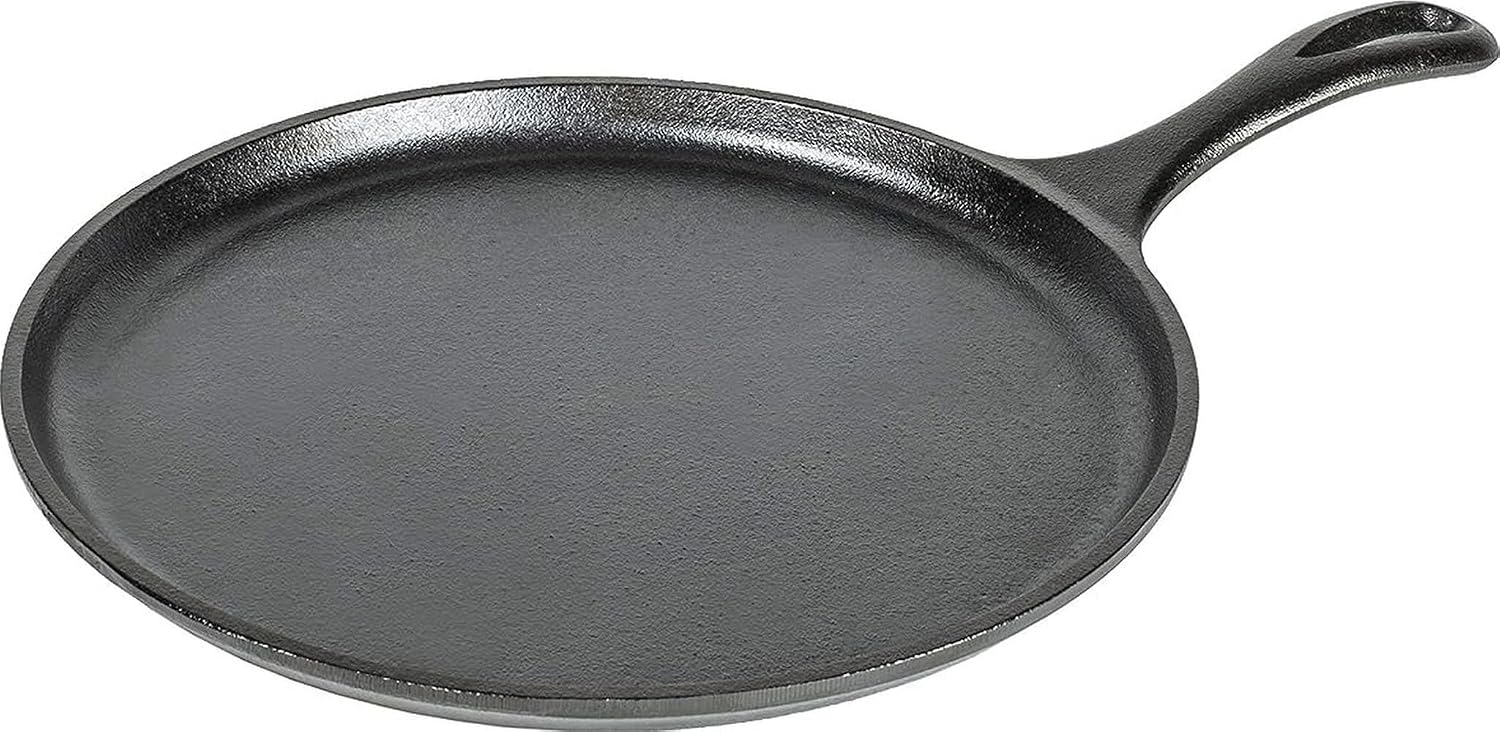
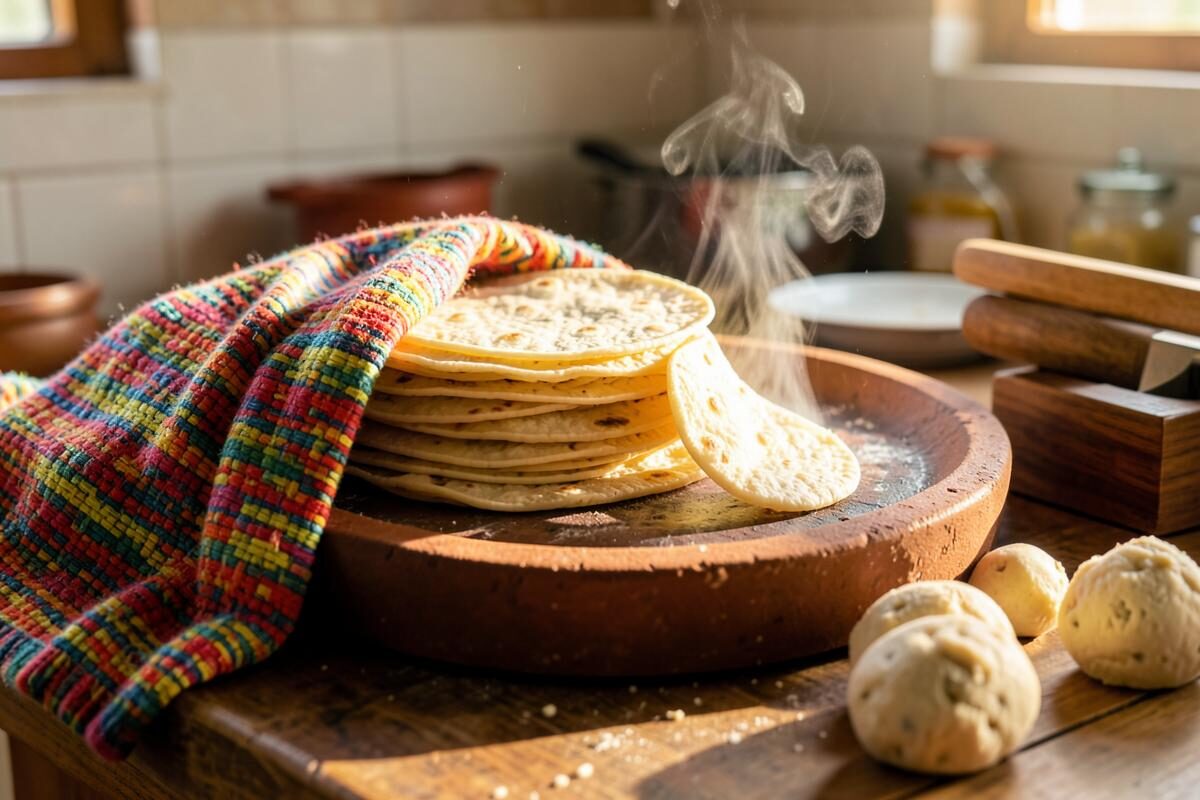
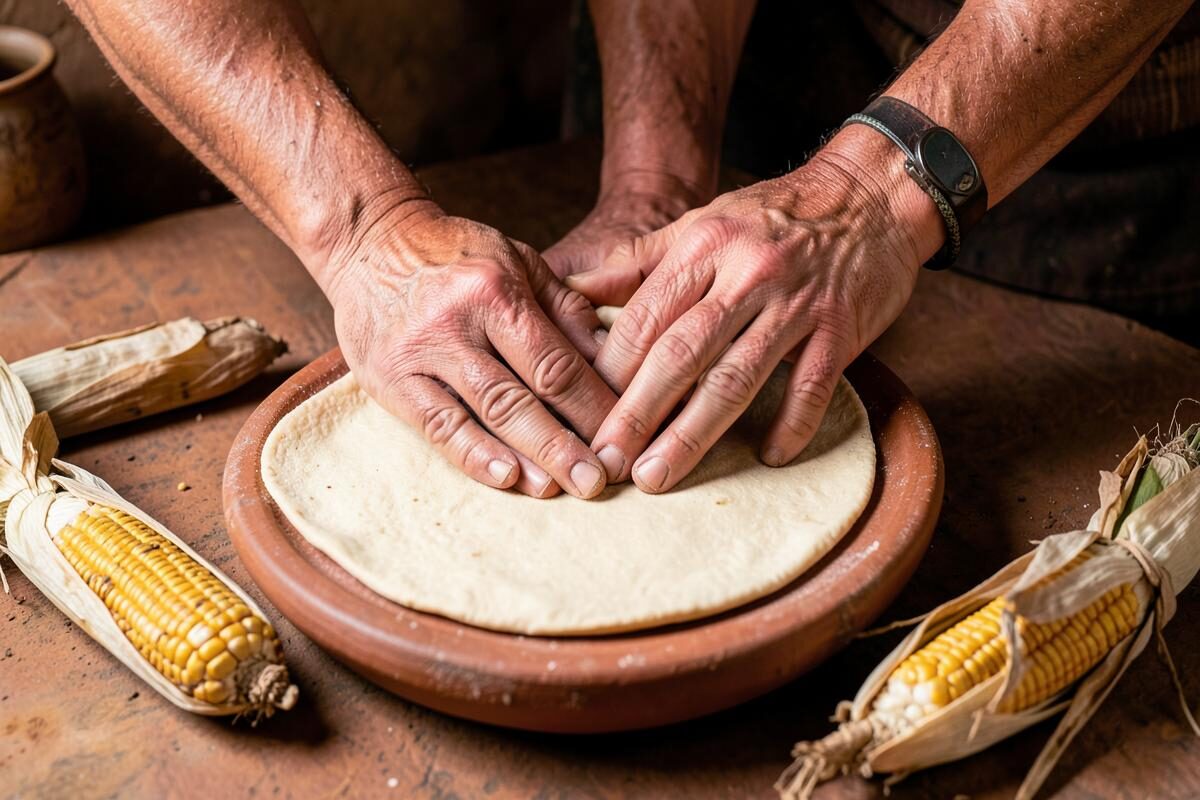
Masa was ground by hand on a stone metate and cooked on a clay comal over fire. Both tools appear across Mesoamerican archaeology and both are still used today. Grinding was daily, hours-long labor performed largely by women.
Colonial disruption
Spanish colonizers introduced wheat and initially treated it as the superior grain, but corn tortillas remained the staple for the majority of the population. In northern Mexico, where wheat grew well, flour tortillas developed as a genuine regional tradition rather than a substitute.
Industrialization
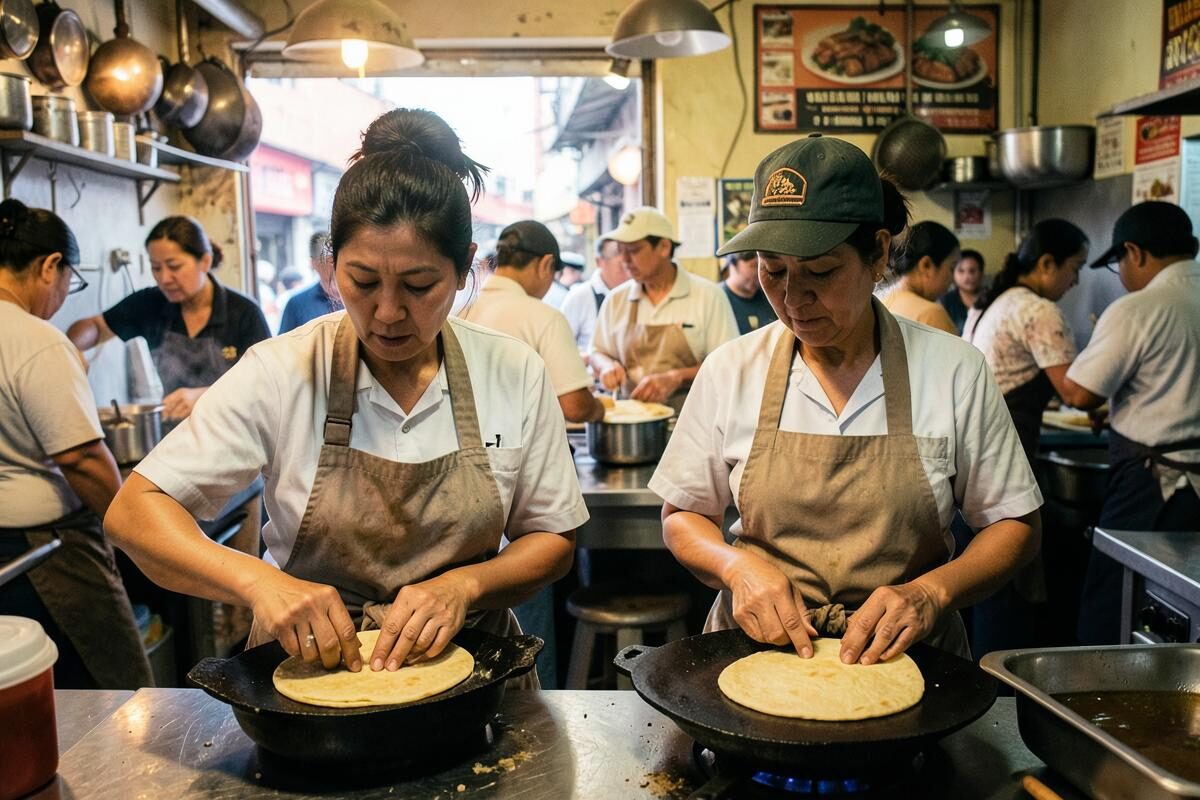
In the twentieth century, mechanical mills, then masa harina flour introduced commercially in the 1940s, and finally automated tortilla machines transformed production. Tortillas became cheap and universally available; freshly ground nixtamal became comparatively rare.
The revival
Since the 2010s, tortillerias and restaurants on both sides of the border have returned to heirloom corn and stone grinding, treating masa as a craft ingredient with varietal character. The result tastes noticeably different, and the movement has given small Mexican corn farmers a market.
Our nixtamalization guide and corn tortilla recipe let you try the old method at home.