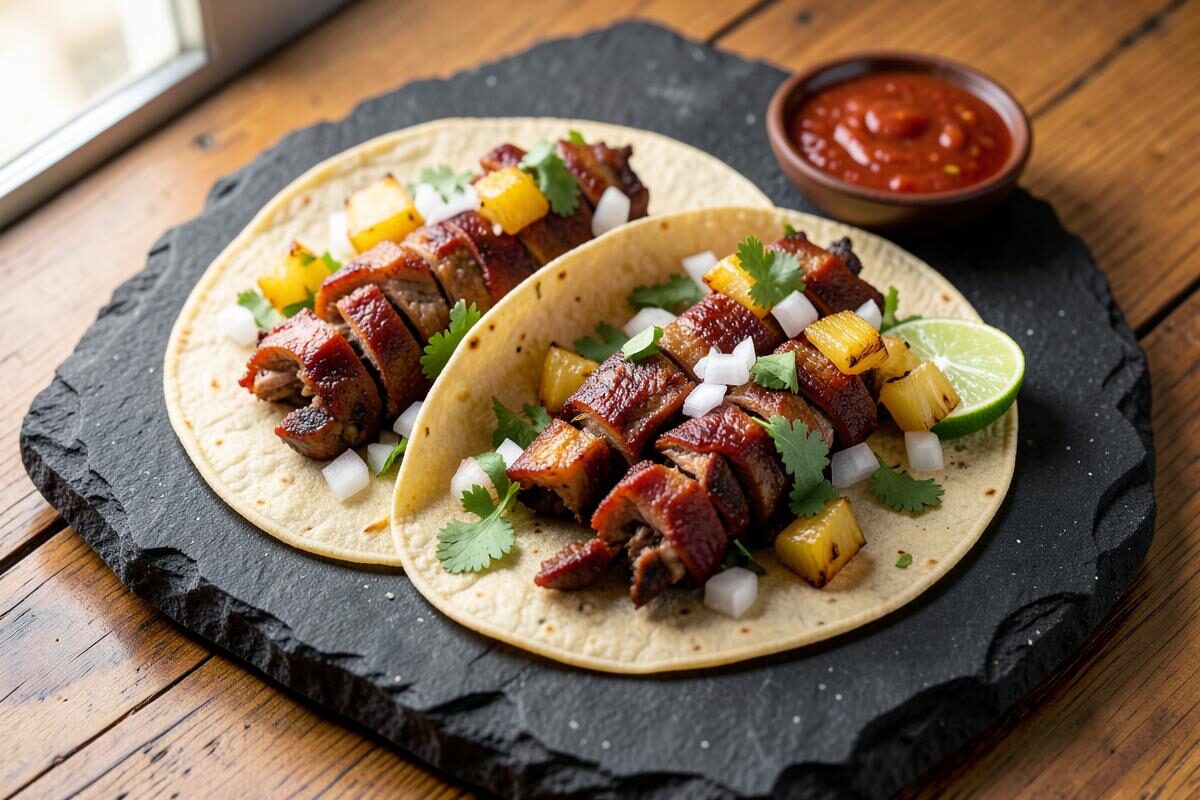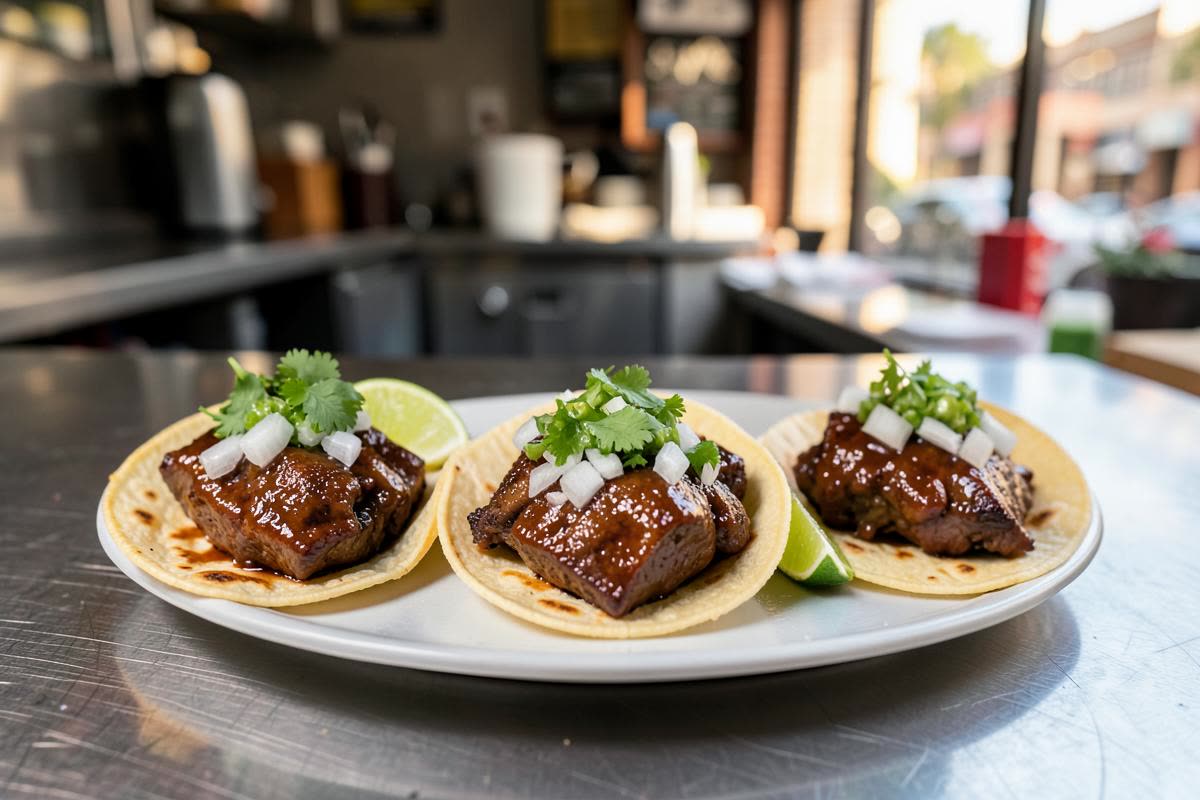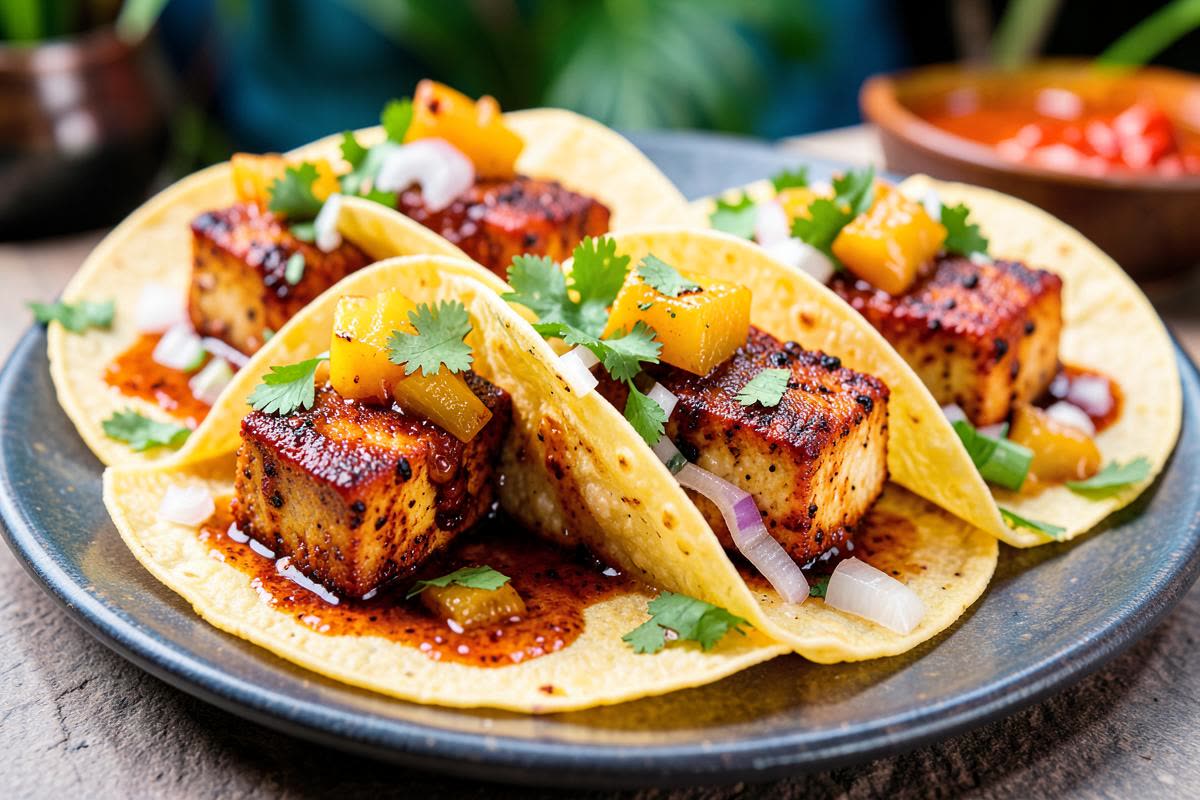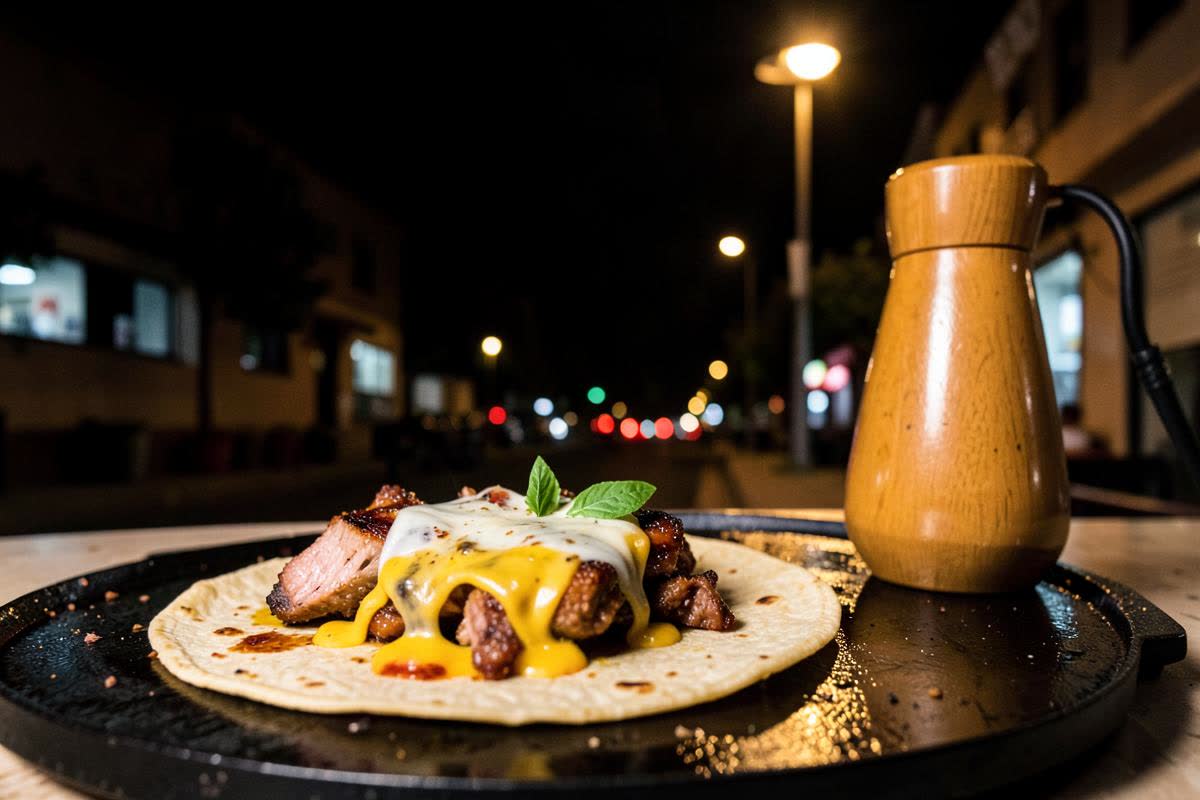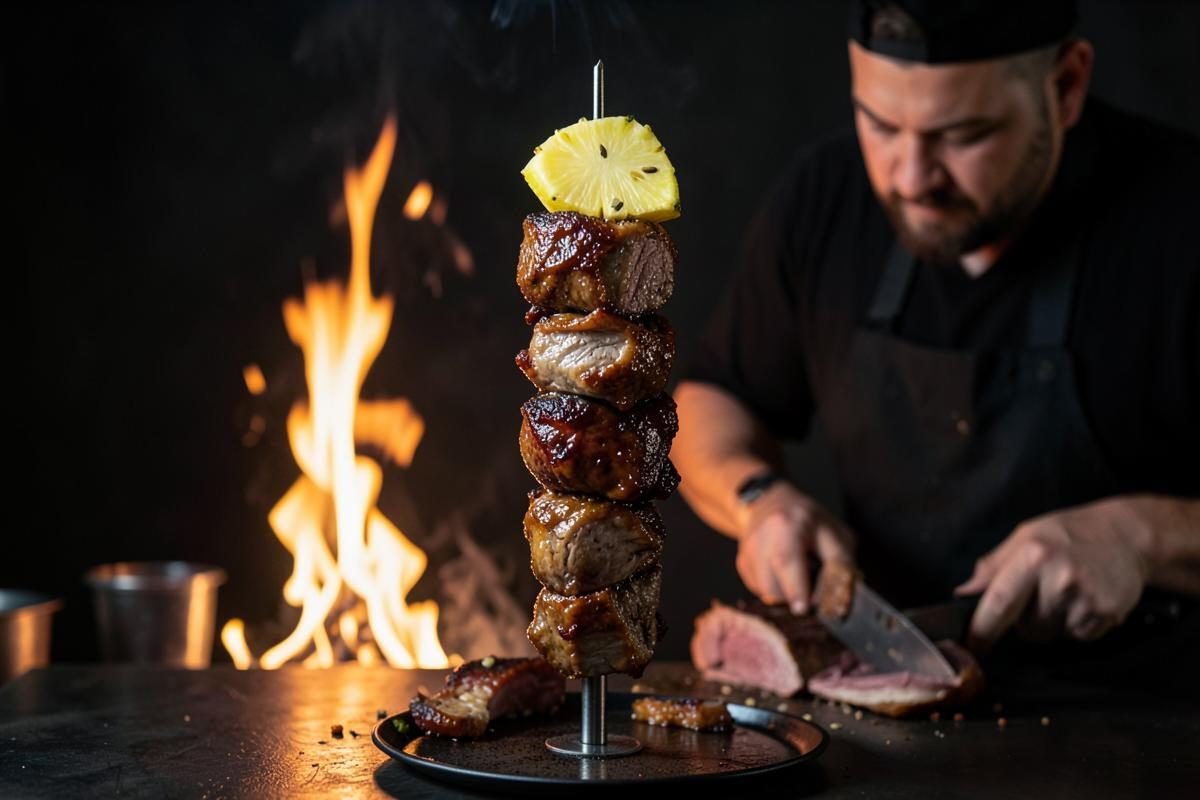
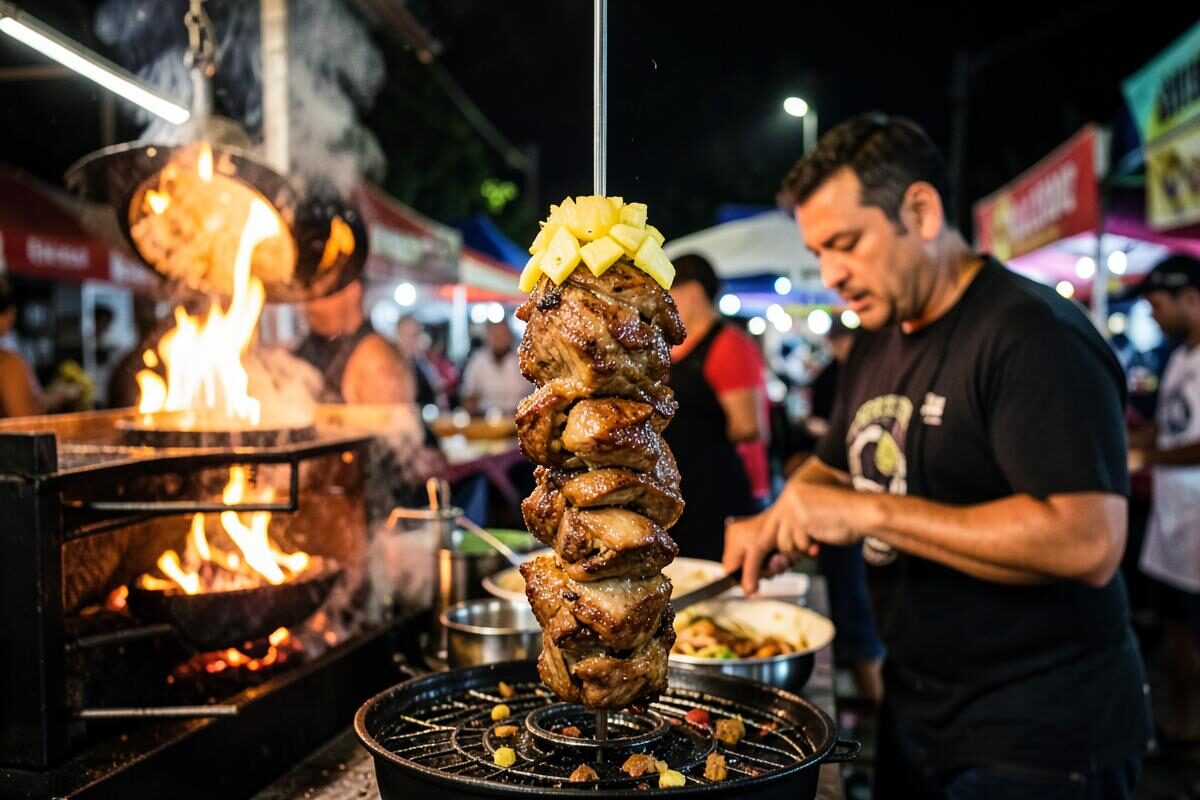
Al pastor is the most famous taco in Mexico and it did not originate there. Its story is one of migration, adaptation, and a spinning vertical spit that changed street food forever.
Lebanese arrivals
Beginning in the late nineteenth century, Lebanese and Syrian families settled in Mexico, many in Puebla. They brought shawarma: lamb stacked on a vertical spit, cooked by radiant heat, shaved thin, served with flatbread. In Mexico this became tacos arabes, served on a pita-like pan arabe.
The Mexican rewrite
Within a generation the dish had been rebuilt with local ingredients. Lamb gave way to pork, the region's most available and affordable meat. The seasoning became a chile adobo of guajillo and achiote rather than Middle Eastern spice. Flatbread became the corn tortilla. Someone, in a decision still debated, added pineapple to the top of the spit.
Why the trompo works
The vertical spit, or trompo, is a self-basting machine. Fat renders down the stack, keeping lower layers moist while the exterior caramelizes against the flame. The taquero shaves off only the crisped outer layer, so every portion has char. No flat griddle can replicate that geometry.
Going national, then global
By the 1960s al pastor was Mexico City's defining street food. Migration carried it to Los Angeles, Chicago, and Houston, where trompos began appearing in immigrant neighborhoods. Today it is on menus in Tokyo, Berlin, and Sydney, often cooked in ovens rather than on spits.
What gets lost, what survives
Oven-roasted al pastor can taste excellent, but it trades the layered char for convenience. The marinade travels well; the fire does not. That gap is why serious taco eaters still hunt for the glow of a real trompo.
Try it
Our al pastor recipe and home marinade guide show how to get close on a home stove, and the gringa article covers its cheesy descendant.